
You have probably seen IV therapy lately, from wellness clinics to social media. It seems to be everywhere. So what is IV therapy, and is it right for you?
In this guide, we explain how IV drips work, what NAD+, glutathione and IV rehydration therapy can and can’t do, the possible risks, and how to arrange safe IV therapy in Dubai.
What This Guide Covers
What is IV therapy?
IV (intravenous) therapy is the process of giving fluids, medicine or other prescribed substances directly into a vein. A trained health professional places a thin tube (cannula) into a vein, usually in your arm. From there, the fluid goes into your bloodstream.
Doctors use IV therapy when someone needs fluids or medicine that would not work well if taken by mouth. Some clinics also offer “wellness drips” with ingredients like NAD+ and glutathione.
However, IV therapy is not necessary for everyone. Before starting any drip, it is always a good idea to speak with a qualified healthcare professional and have your health assessed. Whether it is suitable for you depends on your health, symptoms and medical needs.
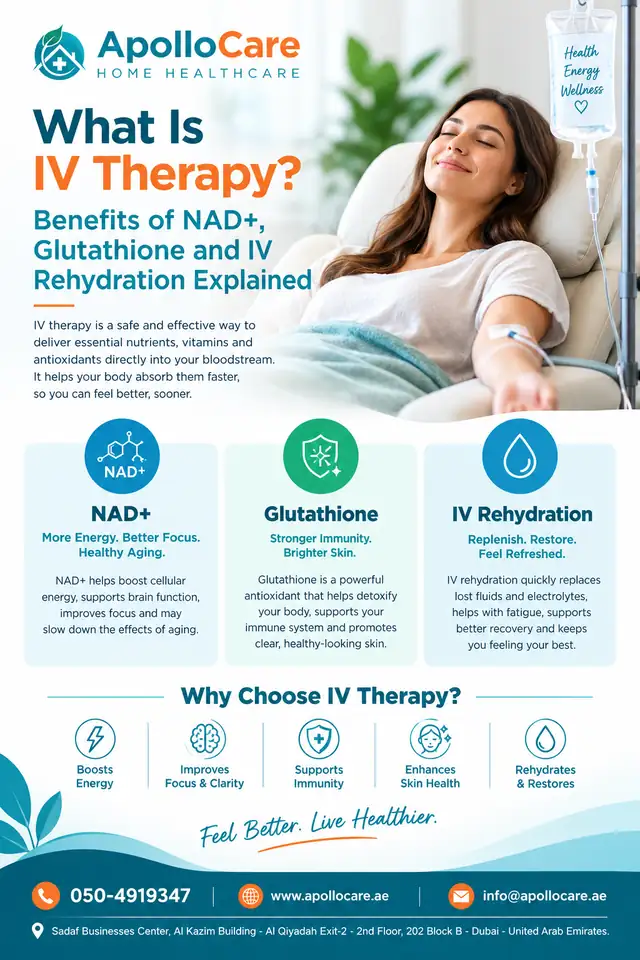
What is NAD+ IV therapy?
NAD+ is a molecule found in every cell in your body. It helps your cells convert food into energy and carry out their jobs.
NAD+ IV therapy means giving NAD+ through a drip into your vein. Some people try it to feel more energetic, stay focused, or get help with aging.
What are the benefits of NAD+ IV therapy?
NAD+ plays a role in normal cell function. Researchers are still learning about the real benefits of getting it through an IV. Some wellness clinics claim NAD+ drips can boost energy and overall wellness. There isn’t strong clinical evidence to support these claims yet.
It’s important to remember that NAD+ works naturally inside your body. That’s not the same as what happens with an IV treatment. An NAD+ drip isn’t proven to stop aging, and it won’t fix tiredness for everyone.
If you’re thinking about trying an NAD+ drip, talk to a healthcare provider. Ask about the benefits, the limits, the cost and the side effects of this treatment. Some people feel nausea or discomfort during the infusion, so ask what to expect so you’re prepared.
What is glutathione IV therapy?
Glutathione is an antioxidant that your body makes on its own. It protects your cells from damage and helps them work properly.
Glutathione IV therapy delivers this antioxidant into your bloodstream through a drip. You often hear about it in wellness circles for boosting antioxidant support and improving skin appearance.
What are the benefits of glutathione IV drips?
Your body needs glutathione, but that doesn’t mean a drip will do much extra for everyone. Researchers haven’t studied glutathione drips well for wellness, skin brightness or anti-aging, so there’s no guarantee that you’ll see results.
If you’re thinking about trying this treatment, ask questions first. What is it for? Where does the product come from? What are the risks? Whatever you choose, the treatment should be prepared carefully and given by a trained professional.
Some clinics push skin-lightening drips, and these are often heavily advertised. Only go to a licensed provider. Good skin comes from everyday habits: sunscreen, a healthy diet and a skincare routine that fits you. There’s no good evidence that a glutathione drip will change your skin tone or how your skin looks.
What is IV rehydration therapy?
IV rehydration therapy means giving your body fluids through a vein. It’s used when you’re dehydrated and a drip is the right choice. You can become dehydrated from vomiting, diarrhoea, fever or not drinking enough.
Common signs of dehydration include feeling thirsty, a dry mouth, dark urine, dizziness and going to the toilet less often than usual. If you are badly dehydrated, don’t wait. Get help right away.
What are the benefits of IV rehydration?
When you’re severely dehydrated, an IV replaces fluids quickly and directly. It’s especially helpful if you can’t keep fluids down due to vomiting or diarrhoea. For mild dehydration, drinking water or an oral rehydration solution is often enough.
When do you need IV rehydration?
If you’re slightly dehydrated, water or an oral rehydration solution may be enough. You may need a drip if your dehydration is more severe, you can’t keep fluids down, or your doctor recommends it.
The type and amount of fluid depend on your situation. If you have kidney disease, a heart condition or other health problems, extra care is needed. Too much fluid can be harmful in some cases.
Some signs should never be ignored. If you’re confused, fainting, very weak or passing little urine, it could mean something serious. See a doctor immediately.
Is IV therapy safe?
An IV drip can be very helpful when it is needed. Like any medical procedure, it also has risks. These include bruising, bleeding, infection at the needle site, irritated veins, allergic reactions, and problems related to the contents of the drip or the amount of fluid being given.
Before you start, be sure to tell the healthcare provider about any health conditions you have, any allergies and all the medicines you are taking. It is also important to ask what is in the infusion, why it is being recommended and what side effects you should watch for.
Make sure the drip is given by a qualified healthcare professional using sterile equipment and proper products. Do not rely on wellness advertising to understand what IV therapy can do. It is important to know both the benefits and the risks of IV therapy.
Can you get IV therapy at home in Dubai?
Yes, it is possible. Having care at home is convenient, especially if you feel safer in your own home. The key is to arrange IV therapy at home in Dubai with a licensed healthcare provider. You should get an assessment first, and only use services that the provider is licensed to provide. Do not hesitate to ask to see the provider’s licence.
In Dubai, home healthcare is regulated by the Dubai Health Authority (DHA). Under the DHA Standards for Home Healthcare Services, patients must be assessed by a qualified physician, and care must be delivered by licensed healthcare professionals. If you live in Abu Dhabi or another emirate, check that your provider is licensed by the local health authority.
There are a few things you must check before booking. Who will assess your health? Who will give you the infusion? What happens if something goes wrong?
At ApolloCare Home Healthcare, we want you to feel sure about your healthcare decisions. If you are thinking about a home IV drip, talk to a doctor first to see if it is right for you.
Frequently asked questions
How long does an IV drip session take?
It depends on the drip. Many sessions take under an hour, while NAD+ drips are usually given more slowly and take longer. Your nurse will tell you what to expect before you start.
Do I need a doctor’s assessment before an IV drip at home in Dubai?
Yes. DHA standards require patients to be assessed by a qualified physician before home healthcare is provided. At ApolloCare, a DHA-licensed doctor reviews your health before any IV drip.
Is IV rehydration better than drinking water?
Not for most people. For mild dehydration, drinking water or an oral rehydration solution is usually enough. IV rehydration therapy helps when dehydration is more severe or you can’t keep fluids down.
Can a glutathione IV drip lighten my skin?
There’s no good evidence that a glutathione drip will change your skin tone. Be cautious of heavily advertised skin-lightening drips, and speak to a doctor before trying one.
Who should be careful with IV drips?
People with kidney disease, a heart condition, allergies or other health problems need extra care, because the type and amount of fluid matters. A doctor’s assessment helps decide whether a drip is safe for you.
Final thoughts
IV therapy is not one treatment. It includes different therapies used for different reasons. NAD+ and glutathione drips are mostly discussed in the wellness world. IV rehydration can be a real help when dehydration is serious and medical care is needed.
Before you choose any treatment, it’s important to understand what the science says, what side effects to expect, and when the treatment is actually needed.
If you want to know more about home healthcare in Dubai, visit ApolloCare Home Healthcare or call +971 50 491 9347. Talk to a qualified healthcare professional about what you need.
Disclaimer: This article is for information only and isn’t medical advice. Please speak to a qualified healthcare professional about your health.
