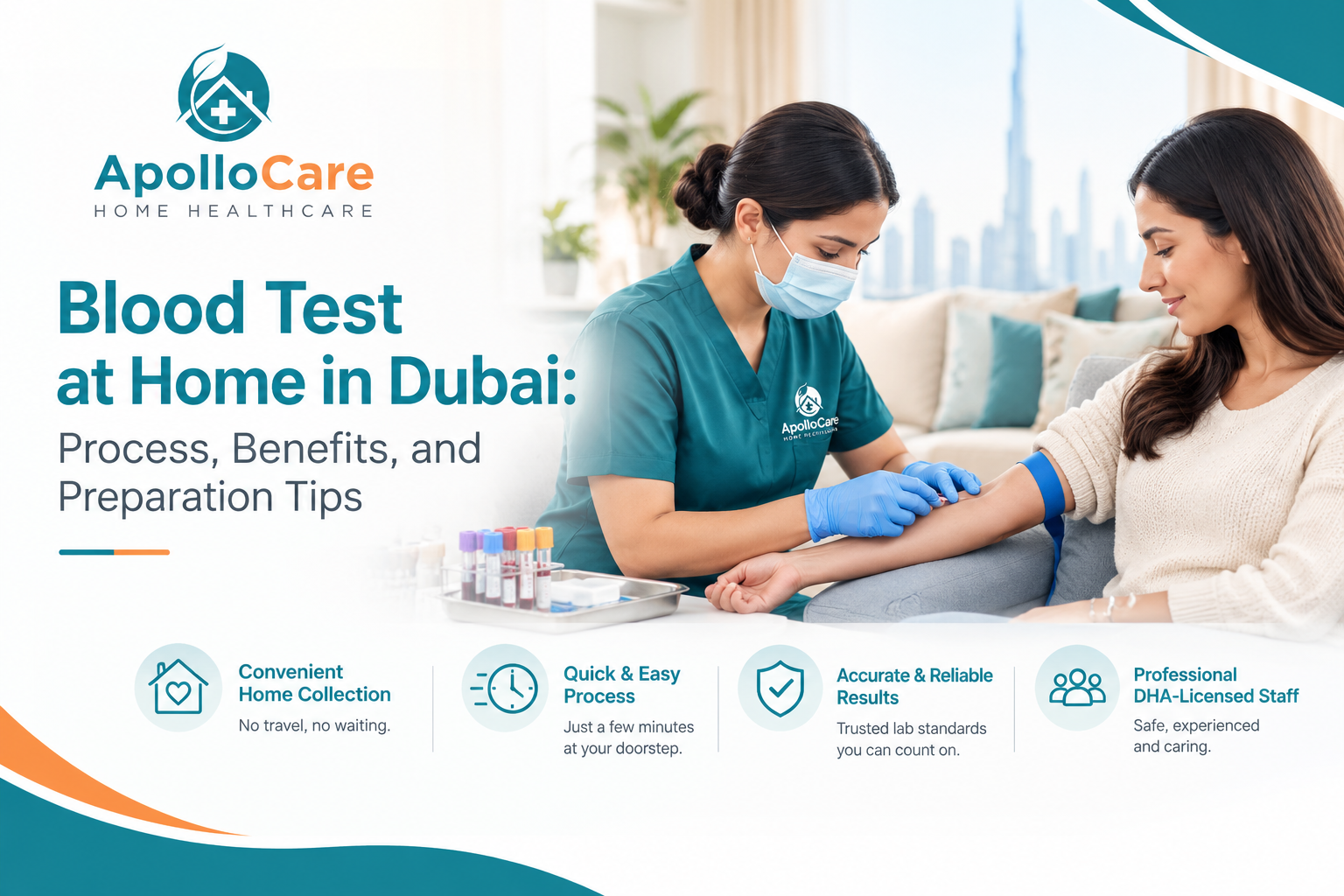
Traffic, parking, waiting rooms, and long queues at the lab can turn a routine blood test into a half-day task. With blood test at home in Dubai, you can save time and enjoy the convenience of professional care at your doorstep. A licensed nurse visits your home, office, or hotel at a convenient time to collect your blood sample, with the collection process typically taking around 15 minutes.
This guide covers the blood tests available at home, how to prepare for them, and what to expect during the process.
How home Blood Test at Home in Dubai works
1. Book your test. Call, WhatsApp or book online. Tell the team which tests you need, or share your doctor’s request form.
2. Get preparation instructions. You’ll be told if you need to fast and for how long.
3. A licensed nurse arrives. The nurse confirms your identity, checks the test request, and explains what will happen.
4. Sample collection. The nurse cleans the skin, uses a new sealed needle, and collects a blood sample, typically drawn from a vein in your arm
5. Transport to the lab. Samples are labelled at your home and transported in temperature-controlled conditions to a licensed laboratory.
6. Results. You receive your report by email or message. Many routine results are ready within 24 hours. Specialised tests can take longer
How to prepare for a blood test at home in Dubai
Fasting
If your test needs fasting, you’ll usually be asked not to eat for 8 to 12 hours beforehand.
Always follow the specific instructions you’re given, as they vary by test and lab. Booking an early-morning slot makes fasting much easier.
Drink water
Unless told otherwise, you can and should drink plain water, even when fasting. Being well hydrated makes veins easier to find. This matters in Dubai, where it’s easy to become mildly dehydrated.
Medicines
Don’t stop any medicine before a blood test unless your doctor tells you to. Some medicines and supplements, such as biotin, can affect certain results, so mention everything you take to the nurse.
On the day
Wear a short-sleeved or loose top.
Have your Emirates ID or passport and insurance card ready.
Keep your doctor’s request form nearby, if you have one.
If you feel faint around needles, tell the nurse. You can lie down for the test.
Who benefits most from home blood tests
Older adults who find travel and waiting tiring.
People with chronic conditions such as diabetes, thyroid disease or kidney disease
who need regular monitoring.
- Busy professionals who can’t take time off for a clinic visit.
- Children, who are often calmer at home.
- Pregnant women and new mothers.
- Patients recovering from surgery who need follow-up tests.
- Hotel guests and visitors who need a test while travelling.
Are Blood Tests at Home as Accurate as Those Done in a Clinic?
Yes, when it’s done properly. The sample is collected the same way and analysed in the same kind of licensed laboratory. Accuracy depends on correct collection, labelling and transport, which is why using a DHA-licensed provider matters. Ask which laboratory analyses your sample.
If your doctor has ordered tests for a medical reason, your health insurance may cover them. Check your policy before you book.
What to do with your results
A lab report shows your results next to a reference range. A result slightly outside the range isn’t always a problem, and a normal result doesn’t rule everything out. Always review results with a doctor, especially if you’re being monitored for a condition.
ApolloCare can arrange a doctor’s visit at home to go through your results.
Routine health checks at home: what to include
Many people choose home blood testing for their annual health check-ups, even when they have no specific health concerns.
A basic adult health check often includes:
- A complete blood count (CBC);
- Fasting blood sugar or HbA1c;
- A lipid profile;
- Kidney and liver function;
- Thyroid function;
- Vitamin D and vitamin B12.
Your doctor may add other tests based on your age, family history and lifestyle. For example, they may add iron studies for women with heavy periods, or more frequent HbA1c checks for people with diabetes.
How often should you test? Healthy adults often have a check-up once a year, or as their doctor recommends. People with long-term conditions usually need more regular monitoring. For example, someone with diabetes may have HbA1c checked every three to six months. Your doctor will set the right schedule for you.
Home collection makes it easier to stick to that schedule. You don’t need to take time off work, arrange transport for an elderly parent, or keep children waiting in a clinic. Many families book tests for several household members in one visit. Ask your provider if this is possible when you book.
Book a blood test at home with ApolloCare
Our DHA-licensed nurses collect samples across Dubai at a time that suits you, including early mornings for fasting tests. See our blood test at home service or call +971 50 491 9347.
Frequently asked questions
Can I drink water before a fasting blood test? Yes. Plain water is usually allowed and helps. Avoid tea, coffee, juice and chewing gum unless your instructions say otherwise.
How long does the home visit take? The collection itself takes a few minutes. Allow about 15 minutes for the full visit.
Is It Safe to Drink Water Before a Fasting Blood Test? Yes. Many parents prefer it, as children are often less anxious in a familiar place. Tell the team the child’s age when booking.
When will I get my results? Many routine results arrive within 24 hours. Some specialized tests take several days.
Do I need a doctor’s prescription? Not always for routine wellness tests. For insurance claims, you’ll normally need a doctor’s request.
