Category: Physiotherapy

  • Back Pain Treatment: 7 Everyday Habits That Could Be Making Your Pain Worse

    Back Pain Treatment: 7 Everyday Habits That Could Be Making Your Pain Worse

    You have tried the heat pack, the painkillers and the new office chair, but your back still aches. Often the problem is not the back pain treatment you are using. It is the small things you do, or do not do, every day.

    Low back pain is the leading cause of disability worldwide, according to the World Health Organization. The good news is that most back pain is not caused by serious damage, and daily habits strongly influence how it feels.

    Below are seven common habits that can keep pain going, what effective back pain treatment looks like, and the warning signs that mean you should see a doctor quickly.

    7 everyday habits that can make back pain worse – back pain treatment guide by ApolloCare Home Healthcare

    7 habits that can make back pain worse

    1. Resting in bed for days

    It feels logical to lie down until the pain passes. But the UK’s National Institute for Health and Care Excellence (NICE) advises people with low back pain to carry on with normal activities as far as they can. Long bed rest weakens muscles and stiffens joints, which can make getting moving again harder.

    • Get up and move little and often, even if it is only for a few minutes at a time.
    • Start with gentle walks around the house, then gradually go further.

    2. Sitting for hours without a break

    There is no single perfect posture. The bigger problem is staying in any one position for too long. In Dubai, that often means a full day at a desk followed by a long drive home in traffic.

    • Stand up or change position every 30 to 45 minutes.
    • On long drives, stop when it is safe and stretch your legs.

    3. Treating your back as fragile

    Many people start guarding their back after a painful episode. They move stiffly, avoid bending and give up activities they enjoy. That fear is understandable, but it can keep the pain cycle going. NICE recommends that people with low back pain get clear information about it and reassurance alongside treatment.

    • Ask a physiotherapist to explain what is going on and which movements are safe.
    • Build your confidence gradually, one activity at a time.

    4. Relying only on passive fixes

    Massage, heat and gadgets can feel good. But NICE advises that manual therapy, such as massage or spinal manipulation, should only be used alongside exercise. It also recommends against belts and corsets, traction, TENS machines and therapeutic ultrasound for low back pain.

    • Make an exercise programme the centre of your back pain treatment.
    • Use massage, heat and other treatments to support exercise, not to replace it.

    5. Skimping on sleep

    Poor sleep and pain feed each other. Pain disrupts sleep, and short or broken sleep can make pain feel worse the next day.

    • Keep regular sleep and wake-up times.
    • Find a comfortable position. A pillow between the knees can help side sleepers.
    • Switch off screens for a while before bed.

    6. Ignoring stress and low mood

    Back pain is not “all in the head”, but stress, worry and low mood can make it feel worse. For people at risk of long-term problems, NICE suggests exercise programmes that may include a psychological approach. The WHO’s 2023 guideline on chronic low back pain also calls for care that addresses physical, psychological and social factors together.

    • Treat stress as part of your recovery plan.
    • Keep up regular activity and spend time outdoors in the cooler hours.
    • Talk to someone you trust, or to a professional, if worry or low mood is building.

    7. Boom and bust: overdoing it on good days

    You feel better, so you spend a whole weekend moving furniture or catching up on gym sessions. Then you are flat for three days. This “boom and bust” pattern is very common.

    • Pace yourself, even on days when you feel great.
    • Increase activity in steady steps rather than big jumps.

    What effective back pain treatment looks like

    Most back pain improves with simple, active care. Guidelines from NICE and the WHO broadly agree that good back pain treatment rests on these principles:

    • Stay active and keep up your normal activities as much as you can.
    • Exercise is central. Group or individual programmes that include strengthening, stretching, aerobic exercise, yoga or Pilates can all help. Choose what you will actually stick with.
    • Hands-on therapy may help, but only alongside exercise.
    • Medicines: NICE suggests anti-inflammatory painkillers (NSAIDs) at the lowest effective dose for the shortest time, after checking your other health risks. It advises against paracetamol on its own and against routine use of opioids. Always check with a doctor or pharmacist first.
    • Imaging is not routine. NICE advises against routinely offering X-rays or MRI scans for low back pain without warning signs. Scans often show age-related changes that do not explain the pain.

    How physiotherapy fits in

    A physiotherapist checks how you move, finds what is aggravating your pain and builds a back pain treatment programme around your work, home and goals. For people who struggle to get to a clinic, such as those in severe pain, older adults or busy parents, physiotherapy at home in Dubai means the plan is shaped around your real environment: your desk, your stairs, your bed.

    You can read more about what a session involves in our guide to professional physiotherapy in Dubai. If your knees also hurt on the stairs, see our article on knee pain treatment in Dubai.

    When back pain needs urgent attention

    Most back pain is not dangerous. But get emergency help by calling 998 or going to the nearest emergency department if you have back pain with:

    • Numbness or tingling around your genitals or buttocks
    • New problems controlling your bladder or bowels
    • Weakness or numbness in both legs

    These can be signs of cauda equina syndrome, a rare but serious condition that needs urgent treatment, as NHS Fife explains. See a doctor promptly, too, if back pain comes with a fever, unexplained weight loss or a history of cancer, or if it follows a fall or accident. For non-emergency concerns, a doctor on call can assess you at home.

    If you also have widespread bone aches, a vitamin D blood test may be worth discussing with your doctor.

    Frequently asked questions about back pain treatment

    Is bed rest good for back pain?

    Not for more than a short while. Guidelines advise staying as active as you can. Gentle movement usually helps recovery more than lying down.

    Do I need an X-ray or MRI for back pain?

    Usually not. NICE advises against routine imaging for low back pain unless there are warning signs or the result would change treatment.

    Should I use heat or ice for back pain?

    Both are used for comfort, and neither treats the cause. Many people find heat eases muscle tension. Use whichever feels better and protect your skin.

    Does a back brace help with back pain?

    NICE recommends against belts and corsets for managing low back pain. Building strength and confidence in movement is more useful.

    How long does back pain usually last?

    Many episodes improve within a few weeks. If your pain lasts longer than six weeks, keeps coming back or stops you working, see a doctor or physiotherapist.

    Can physiotherapy at home help back pain?

    Yes. Home physiotherapy offers the same assessment and exercise-based back pain treatment, adapted to your space. It is especially useful if travelling makes your pain worse.

    Back pain treatment starts with daily habits

    The most effective back pain treatment is rarely a single fix. It is a combination of moving more, pacing yourself, sleeping well, managing stress and following an exercise plan that suits you. Change one or two of the habits above this week, and notice what helps.

    If you would like expert guidance, ApolloCare’s DHA-licensed physiotherapists can assess you and build a back pain treatment plan at home, anywhere in Dubai. Call +971 50 491 9347 or contact us.

    Disclaimer: This article is for general information and is not a substitute for medical advice. In an emergency, call 998.
    Sources

  • Knee Pain Treatment in Dubai: Helping You Move Better and Recover Faster

    Knee Pain Treatment in Dubai: Helping You Move Better and Recover Faster

    Knee Pain Treatment in Dubai for pain relief and improved mobility

    Today, many people in Dubai need physiotherapy after injuries,
    surgeries, or long-term pain. Life can be busy, and going to clinics regularly is not always easy. That is why Knee Pain Treatment at home are becoming more popular.

    Home physiotherapy helps patients recover in a comfortable and safe environment. It is simple, effective, and focused on personal care.

    What is Physiotherapy?
    Physiotherapy is a treatment that helps improve body movement,
    reduce pain, and increase strength.
    It is useful for

    • Back pain and neck pain
    • Joint pain
    • Stroke recovery
    • Sports injuries
    • Post-surgery recovery
    • Muscle stiffness and weakness

    Benefits of Knee Pain Treatment
    Many people now prefer physiotherapy at home in Dubai because it is more comfortable and flexible


    1.Comfortable Environment
    One of the biggest benefits of home physiotherapy is the comfortable environment. Patients feel more relaxed and safer when they are treated in their own home. There are no hospital stress or unfamiliar surroundings, which helps reduce anxiety and improves focus during therapy. In a peaceful home setting, patients can follow exercises more easily and recover in a better and natural way.

    2.One-on-One Care
    In home physiotherapy, the patient gets full personal attention from the physiotherapist. There are no other patients, so care is focused only on one person. This helps the therapist understand the patient’s condition better and give proper exercises based on their needs. It also makes recovery more effective and safe.

    3.No Travel Stress
    With home physiotherapy, patients do not need to travel to clinics or hospitals. This saves time and reduces stress, especially for people with pain or movement problems. Patients can get treatment easily at home in a comfortable way without any travel difficulty.

    4.Family Support & Learning
    When physiotherapy is done at home, family members can also be
    part of the care process. They can observe the therapy sessions and
    understand how exercises are done correctly.
    If they have any doubts, the physiotherapist can explain everything in a simple
    way. This helps family members learn how to support the patient better at
    home. After each session, proper instructions and care tips are also given to
    the family. This makes it easier for them to continue basic support and ensure
    the patient follows the right routine for faster recovery
    5.Safe for Elderly Patients
    Home physiotherapy is very safe for elderly patients. They can get
    treatment in their own home without any travel or risk. The therapist gives
    care based on their health condition and helps them move safely. This makes
    elderly patients feel more comfortable, secure, and supported during recovery.
    Physiotherapy is an important part of recovery for many patients.
    Getting treatment at home makes it more comfortable, safe, and easy. It helps
    patients recover faster with proper care and support.
    If you are looking for trusted physiotherapy services in Dubai, ApolloCare
    provides professional physiotherapists who offer quality care at your home.
    Need Physiotherapy at home? Contact Apollocare now

  • Physiotherapy in Dubai -Helping You Move Better and Feel More Comfortable

    Physiotherapy in Dubai -Helping You Move Better and Feel More Comfortable

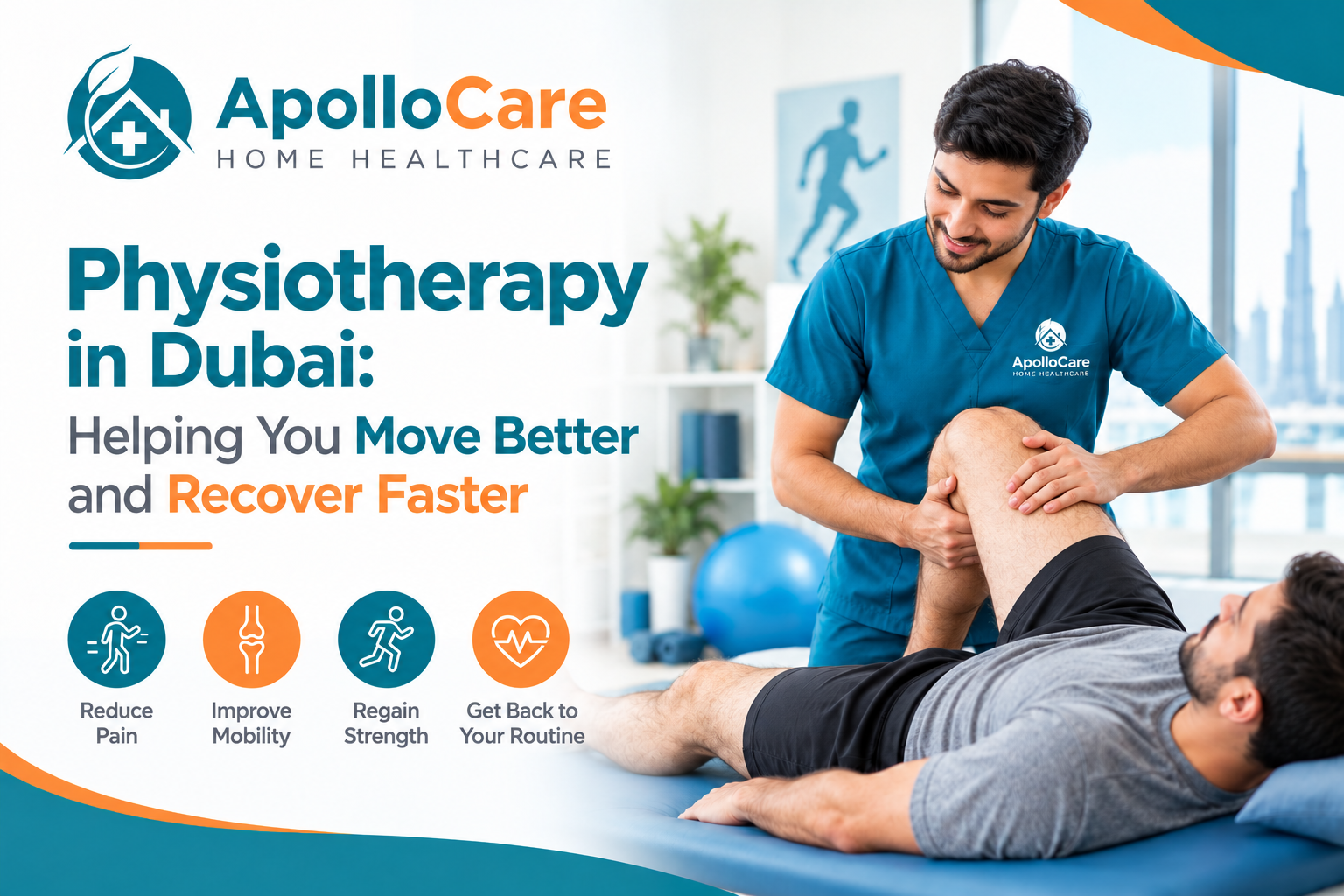
    Physiotherapy in Dubai

    Pain, stiffness, or difficulty moving can affect much more than your physical comfort. It can make everyday activities like climbing stairs, sitting at work, exercising, or even getting out of bed feel difficult.

    With the right physiotherapy, many people can work towards better movement, improved strength, and greater confidence in their daily activities. For people who prefer treatment without travelling to a clinic, physiotherapy at home in Dubai can also make rehabilitation more convenient.

    At ApolloCare Home Healthcare, our DHA-licensed physiotherapists bring clinical expertise and specialized rehabilitation equipment directly to your doorstep.

    Why Choose In-Home Physiotherapy?

    Receiving treatment in your familiar home environment offers several critical clinical advantages:

    • Customized Rehabilitation: Exercises designed around your actual living space, stairs, and furniture.
    • Zero Travel Stress: No need to endure Dubai traffic or navigate waiting rooms while dealing with limited mobility.
    • Family Involvement: Loved ones can easily observe treatment sessions and learn safe assistance techniques.
    • Flexible Scheduling: Sessions planned around your family’s routine, morning or evening.

    “True healing happens where you feel safest and most comfortable. Home-based therapy empowers patients to regain their independence faster.” – ApolloCare Clinical Team

    Specialized Conditions We Treat

    Our certified physical therapy team provides specialized care plans for:

    1. Post-Surgical Rehabilitation: Hip replacement, knee surgery, and orthopedic recovery.
    2. Elderly Mobility & Fall Prevention: Balance exercises and gentle strength building for seniors.
    3. Stroke & Neurological Care: Regaining motor skills and movement coordination.
    4. Chronic Pain Management: Relief from lower back, neck, and joint pain.

    Why Consider Physiotherapy in Dubai?

    Dubai’s busy lifestyle can make it difficult to find time for regular healthcare appointments. Long working hours, commuting, family responsibilities, and daily routines can easily get in the way of rehabilitation.

    Choosing physiotherapy in Dubai allows you to access professional support for a range of movement and pain-related concerns.

    Physiotherapy may be useful for:

    • Back and neck discomfort
    • Knee pain
    • Sports-related injuries
    • Muscle and joint stiffness
    • Mobility difficulties
    • Post-surgery rehabilitation
    • Balance and strength concerns
    • Age-related movement problems
    • Recovery after an injury

    Your treatment should always be based on your individual condition rather than following a general exercise routine.

    Back Pain Treatment

    Back pain is common and can develop for different reasons, including poor posture, muscle strain, prolonged sitting, injuries, or certain physical conditions.

    The first step in treating back pain is understanding what could be causing it. Rather than simple Back Pain treatment the physiotherapist may assess your posture, flexibility, strength, movement, and daily habits.

    Treatment may include:

    • Gentle mobility exercises
    • Strengthening exercises
    • Stretching
    • Posture and movement guidance
    • Manual therapy where appropriate
    • Exercises for long-term back strength

    Every case is different, so treatment is tailored to the cause and severity of the pain.

    Knee Pain Treatment

    Knee pain can affect people of different ages and activity levels. It may make walking, climbing stairs, standing for long periods, or exercising uncomfortable.

    Knee Pain Treatment through physiotherapy focuses on improving how the knee and surrounding muscles function. Your physiotherapist may assess your leg strength, flexibility, balance, and movement before recommending suitable exercises.

    A treatment plan may include:

    • Knee mobility exercises
    • Strengthening of the leg and supporting muscles
    • Balance exercises
    • Flexibility work
    • Movement retraining
    • Rehabilitation following an injury or procedure

    The aim is to gradually help you regain comfortable movement while supporting your everyday activities.

    What If the Physiotherapist Came to You?

    This is one reason physiotherapy at home Dubai services are becoming a practical option for people with busy schedules or limited mobility.

    Instead of:

    Traffic → Parking → Waiting → Treatment → Traffic again

    you can have your physiotherapy session in the comfort of your own home.

    A home session can be particularly convenient for:

    • Older adults
    • People recovering from surgery
    • Individuals with limited mobility
    • People recovering from injuries
    • Busy professionals
    • Anyone who finds travelling uncomfortable

    And there is another advantage: your physiotherapist can see how you move in the environment where you actually spend your day.

    Physiotherapy Isn’t Just for Athletes

    There’s a common misconception that physiotherapy is mainly for sports injuries.

    It isn’t.

    You don’t need to be a runner, athlete, or gym enthusiast to benefit from physiotherapy.

    It can be part of rehabilitation and movement management for people dealing with everyday problems such as back pain, knee discomfort, stiffness, reduced mobility, balance difficulties, or recovery after an injury or procedure.

    Sometimes, the goal is simply being able to walk, bend, climb stairs, or get out of bed more comfortably and those things matter.